
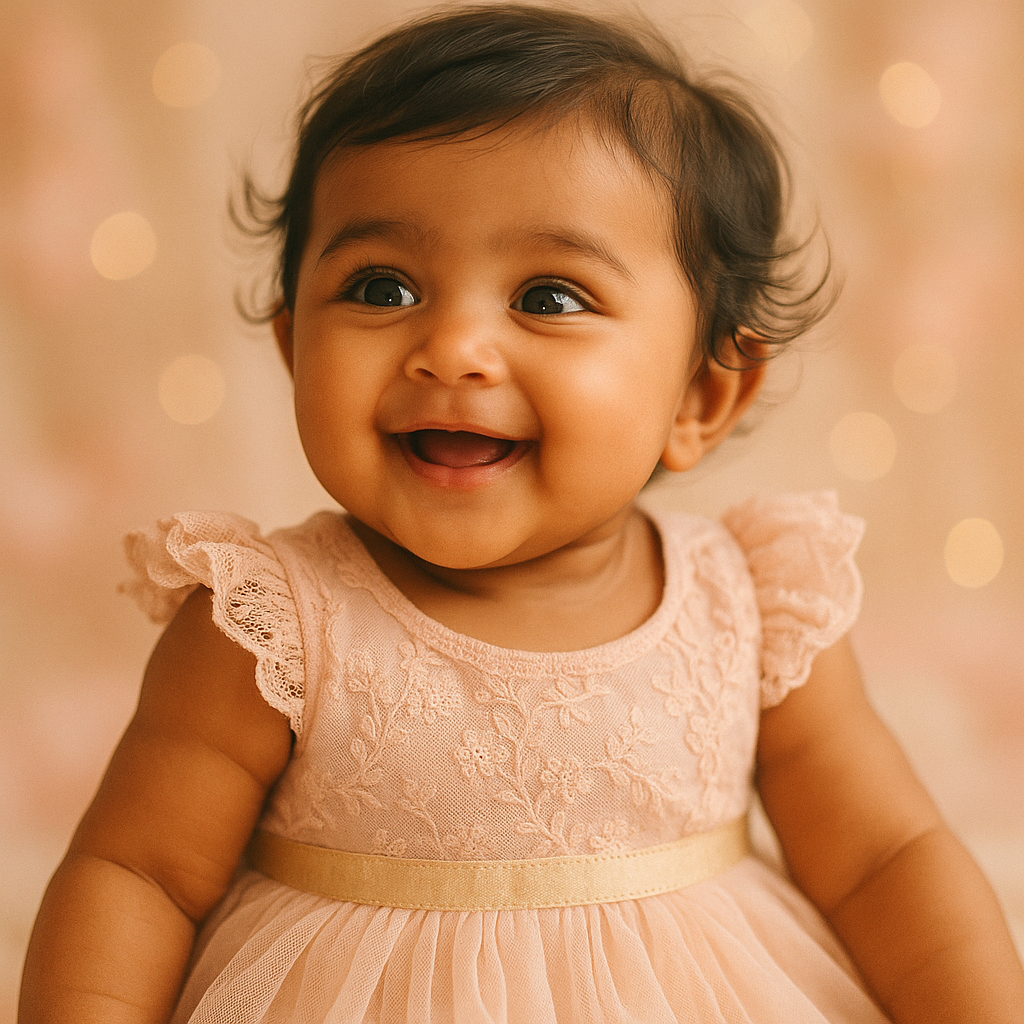
There are two moments when parents judge a dress.
The first is when it's hanging on a rack. That's when lace catches the eye, tiny flowers feel charming, and a soft shimmer makes it easy to imagine birthday photos.
The second moment comes after your baby has been wearing it for a while. She's been carried from one relative to another, reached for another piece of cake, crawled across the floor, and perhaps even fallen asleep in someone's arms. By then, she isn't thinking about how the dress looks. She's only feeling how it sits against her skin.
That's why, before you touch the lace, it's worth checking the lining
The Fabric Magic Guide
A baby's skin is thinner and more sensitive than ours, so the fabric touching it throughout the day matters far more than the decorative layers everyone sees. A beautiful outer layer can still feel wonderfully comfortable when it's paired with a soft, breathable lining.
For everyday wear and most celebrations, cotton remains one of the gentlest choices. It's breathable, lightweight, and helps keep little ones comfortable even during warm afternoons. Bamboo fabrics are another lovely option, known for their softness and moisture-wicking properties, while modal offers a smooth feel for longer events. During hotter months, linen provides excellent airflow, though it's often blended with softer fabrics for babies
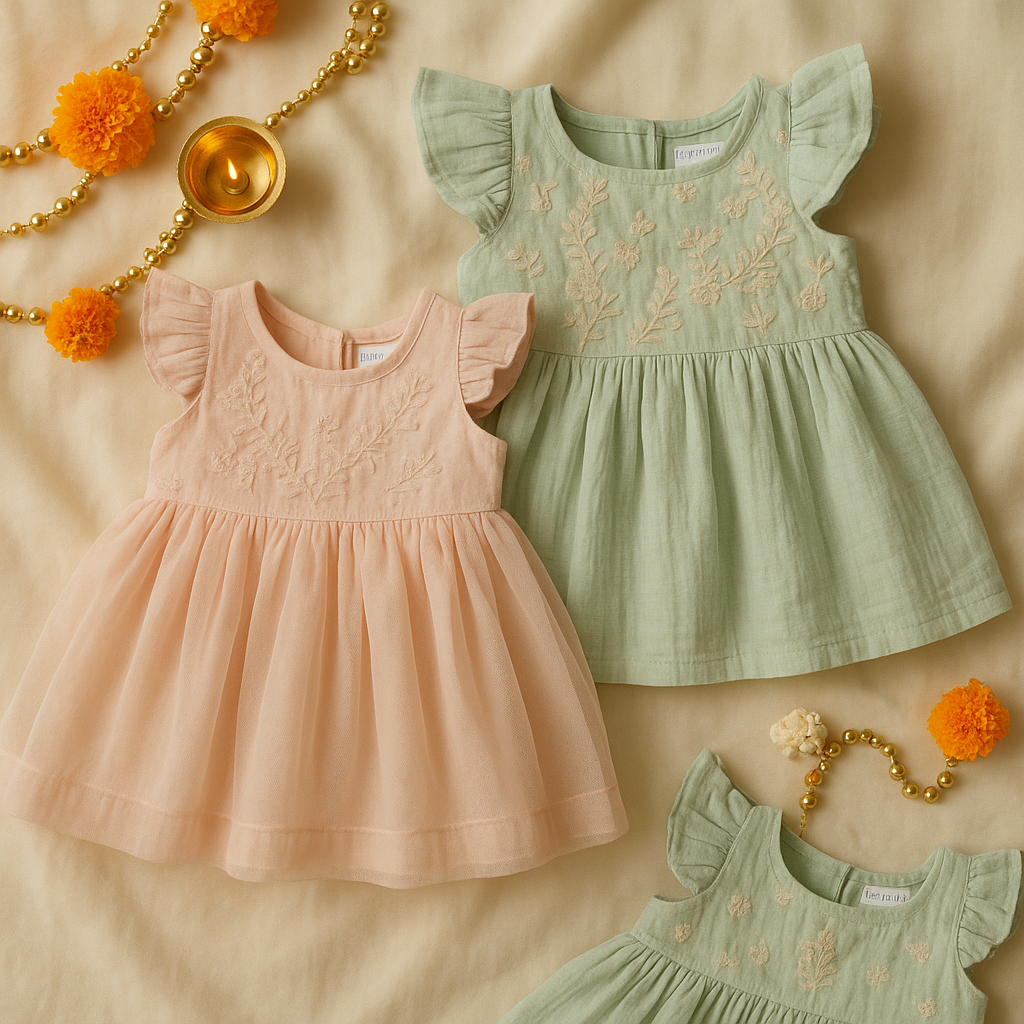
The Season Matters More Than You Think
A summer birthday, an outdoor naming ceremony, and a winter wedding all ask different things from a dress. Lightweight, breathable fabrics are usually more comfortable in the heat, while cooler months are often better managed with gentle layers rather than heavier, less breathable materials.
Instead of asking, "What's the best fabric?" it can be more helpful to ask, "What will my baby be doing today?" The answer often points you toward the right choice.
Look Beyond the Fabric Label
A dress made with net or tulle isn't automatically uncomfortable. If those decorative layers sit over a soft cotton lining with smooth seams and well-finished edges, they can be just as suitable for special occasions.
On the other hand, fabrics that trap heat or feel rough directly against the skin may leave babies uncomfortable long before the celebration is over. The fabric name tells part of the story, but the lining, stitching, seams, and overall construction complete it.
Comfort Is the Detail They'll Remember
Beyond fabric, the style of the dress also plays a significant role in your baby’s comfort. Here are some tips to consider:
- Loose Fit: Choose dresses that have a loose fit to allow for free movement. Tight clothes can restrict circulation and cause discomfort.
- Adjustable Features: Look for dresses with adjustable straps or elasticized waistbands. These features can help accommodate your baby’s growth without compromising comfort.
- Seamless Designs: Dresses with minimal seams or flat seams can prevent chafing and irritations on sensitive skin.
Where to Buy Skin-Safe Dresses
A beautiful dress will always catch someone's eye. A comfortable one is far less noticeable and perhaps that's exactly the point.
When babies are free to move, explore, laugh, and rest without fussing over what they're wearing, the fabric has already done its job.

