
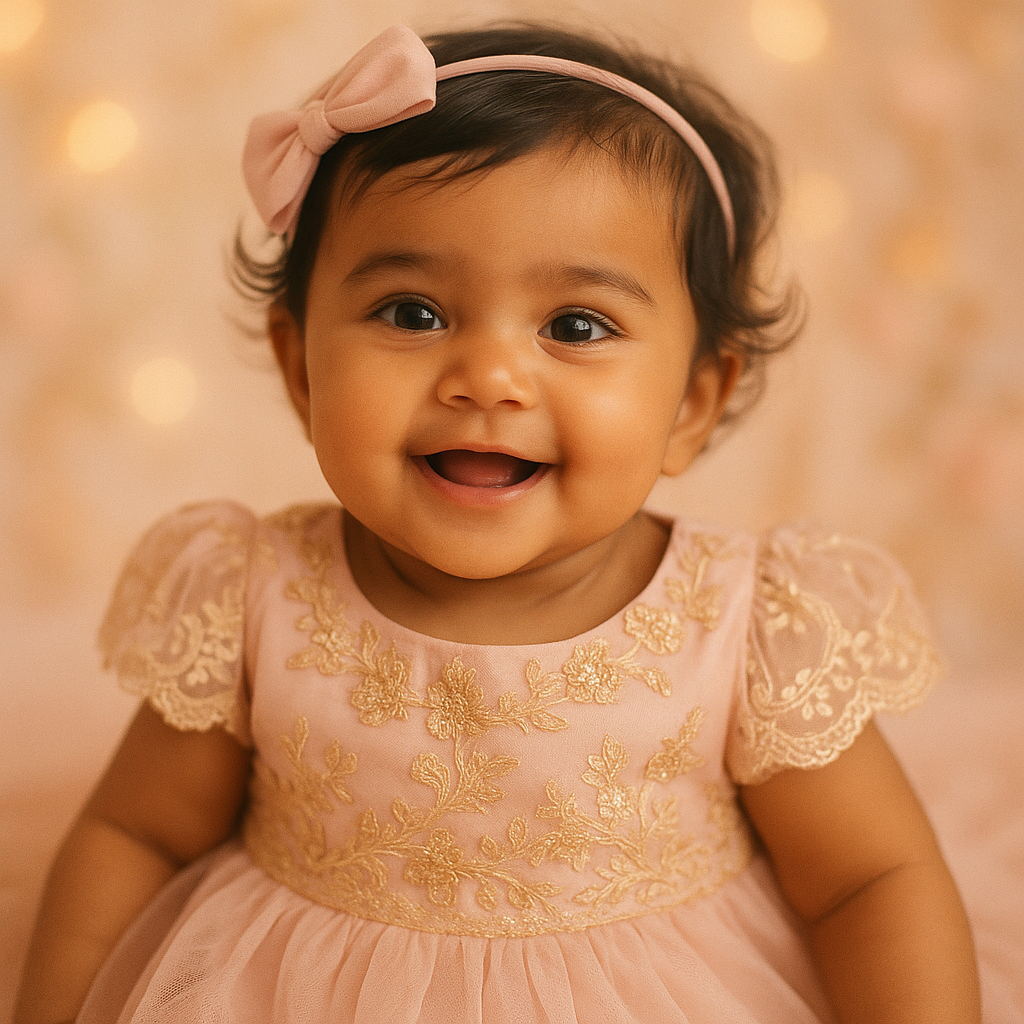
The celebration usually ends before the dress does.
There's often a tiny spot of cake near the cuff, a ribbon that's somehow come loose, and a layer of tulle still holding onto a flower petal from the day. It gets folded carefully over someone's arm before finding its way back home.
Some clothes go straight into the laundry basket. Some make you pause for a moment.
Handcrafted baby dresses have a way of doing that. Perhaps it's because they were chosen for a first birthday, a family wedding, or a festival that brought everyone together. They become part of the occasion, and caring for them feels a little different.
The good news is that looking after them doesn't have to be complicated. A few thoughtful habits can help keep them beautiful for years, long after your little one has outgrown them.
Before You Wash, Take a Closer Look
Every handcrafted dress tells you how it would like to be cared for.
The fabric, the embroidery, the layers of tulle, even the tiny embellishments all respond differently to water and movement. That's why the care label deserves a quick look before the dress reaches the sink or washing machine.
Cotton is usually forgiving and easy to clean. Tulle appreciates a gentler touch. Dresses with hand embroidery, pearls, sequins, or delicate appliqués often benefit from extra care, as vigorous washing can loosen details that were stitched individually.
Knowing what the dress is made from is the first step in preserving it.

Gentle Washing Goes a Long Way
The answer is usually simpler than expected.
Cold or lukewarm water is kinder to both fabric and colour. A mild detergent is enough for most occasions, especially since children's clothes rarely need harsh cleaning products. If the dress has decorative details, turning it inside out or placing it inside a mesh laundry bag adds another layer of protection during a gentle machine cycle.
For dresses with intricate handwork, hand washing remains the safest choice. Let the fabric soak for a few minutes before rinsing gently. Avoid twisting or wringing the dress, as this can distort the shape of tulle and stretch delicate stitching.
When it's time to dry, lay the dress flat or hang it in a shaded, well-ventilated space. Direct afternoon sunlight may fade colours over time, particularly on pastel shades.
Sometimes, doing less is exactly what the fabric needs.
Every Stain Doesn't Need Panic
Children have a remarkable ability to find the one thing that stains.
Cake frosting, mango juice, chocolate, or a little grass from running across the lawn usually become part of the day before they become part of the laundry.
The best approach is simply to act early.
Blot the stain gently instead of rubbing it deeper into the fabric. Plain water often removes fresh stains surprisingly well. For tougher marks, use a mild baby-safe detergent on a small hidden area first before cleaning the entire spot.
Strong bleach and aggressive stain removers may solve one problem while creating another, especially on delicate fabrics and embellishments.
Patience is often more effective than scrubbing.
Some Dresses Stay Long After They're Outgrown
Children outgrow clothes faster than parents expect. One day the sleeves fit perfectly. A few months later, they're suddenly too short. Yet some dresses rarely leave the family.
They find their way into memory boxes, are passed down to younger siblings or cousins, or quietly wait inside a wardrobe until someone opens it years later and smiles.
Looking after a handcrafted dress isn't about keeping it perfect forever.
It's about giving those little pieces of childhood a chance to last a little longer.

