
The first sign of a festival in our house is never the lights.
It is the sound of cupboards opening one after another.
Someone is searching for bangles that were carefully stored after the last celebration. A grandmother is asking whether the child will feel cold later in the evening. A father is pretending not to notice the growing pile of clothes on the bed.
And in the middle of all this, a little girl stands very still for exactly three seconds while her outfit is adjusted.
Then she starts spinning.
I think that is the moment she realizes the day is different.
Before the guests arrive
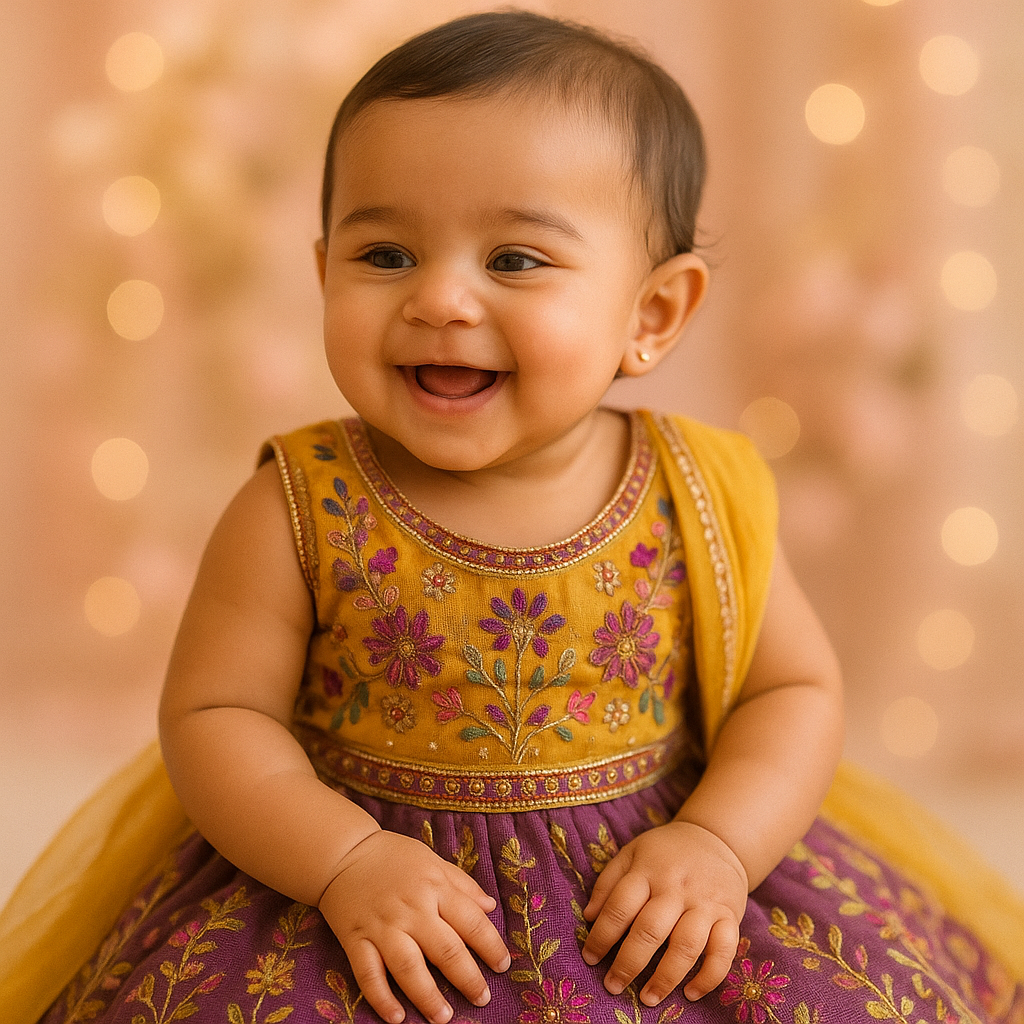
Last Diwali, I watched my daughter step into a mustard and purple embroidered lehenga choli for girls. The blouse was being tied at the back while she kept asking if the diyas had been arranged yet. She was far more interested in the sweets cooling in the kitchen than in the mirror in front of her.
When she finally looked down at the skirt, she gave it one experimental twirl.
The mustard caught the afternoon light like marigold petals. The purple moved like the evening sky just before sunset. For a second, the room went quiet because every adult recognized the same thing at once: she looked festive. Not dressed up

The colors that feel like an Indian celebration
I have always thought mustard belongs naturally to Indian festivals. It carries the warmth of turmeric, marigolds, and sunlight on temple steps. Purple brings depth and a touch of celebration without feeling too grown up.
Together, they create the kind of color combination that stands out in family photographs while still feeling timeless. It is one reason a mustard and purple embroidered lehenga choli for girls works beautifully for Diwali, Navratri, weddings, and even smaller family gatherings.
But children rarely notice color palettes. They notice whether they can move.
The real test happens on the floor
Within half an hour, my daughter was no longer near the mirror.
She was sitting cross-legged on the floor with her cousins, arranging flower petals into uneven circles. The skirt spread around her like a little festival tent. Every few minutes she leaned forward, laughed loudly, and forgot entirely that she was wearing festive clothes.
That scene changed the way I think about ethnic wear for girls.
The best outfits are not the ones that keep a child looking perfect. They are the ones that allow her to stop thinking about her clothes altogether.
A comfortable embroidered lehenga choli lets a child sit on the floor, reach for sweets, run through the hallway, and climb into a grandparent’s lap without being reminded to “be careful” every five minutes.
The evening always changes the outfit
By dinner time, the careful braid had loosened.
One bangle had disappeared. There was a tiny smear of kajal near her cheek that nobody had noticed. The dupatta had slipped slightly to one side.
And somehow she looked even more beautiful then.
There is something lovely about festive clothes after they have been lived in for a few hours. The fabric softens, the child relaxes, and the photographs become less posed and more real.
My favorite picture from that night is not the formal family portrait. It is the blurry photo of her laughing with a mouth full of kaju katli, purple skirt gathered around her knees, completely unaware that anyone was taking a picture.
Why this embroidered lehenga choli stays in memory
Months later, she could not describe the embroidery.
She remembered the sparklers
She remembered staying awake later than usual
She remembered her cousins
That is what childhood celebrations are made of. The outfit becomes part of the memory quietly, almost in the background, holding the evening together without demanding attention.
Whenever I see a mustard and purple embroidered lehenga choli for girls now, I think less about fashion and more about that brief pause before the twirl, the tiny moment when a child understands that tonight is not an ordinary evening.
And perhaps that is why festive dressing matters at all.

